My first instinct with automated product video was to lock everything down. One template, one input form, one render button. It sounded efficient: product data goes in, a neat social clip comes out, and nobody has to touch a timeline.\n\n \n\nThen I watched what happened when a real person used the first drafts. They did not want to rebuild the video. They wanted to make one sensible exception. Swap the lead image. Shorten an awkward line. Hold a product shot for another second. Remove a scene that did not match the campaign.\n\nThat was the lesson: a good template should be firm enough to keep work on-brand, but porous enough to let someone make the small edits that turn a generated draft into a usable one.\n\n## The template is still the operating system\n\nI am not arguing for a blank video canvas. Blank canvases are expensive. They turn every product video into a new creative project, with new decisions about typography, motion, duration, crop, captions, transitions, and export settings.\n\nA template should decide the boring, repeatable parts. It can define the aspect ratio, safe areas, font family, motion presets, intro and outro treatment, audio rules, caption style, and the order of the main scenes. It can also specify what data it expects: product name, image list, price, feature bullets, a short hook, and a call to action.\n\n
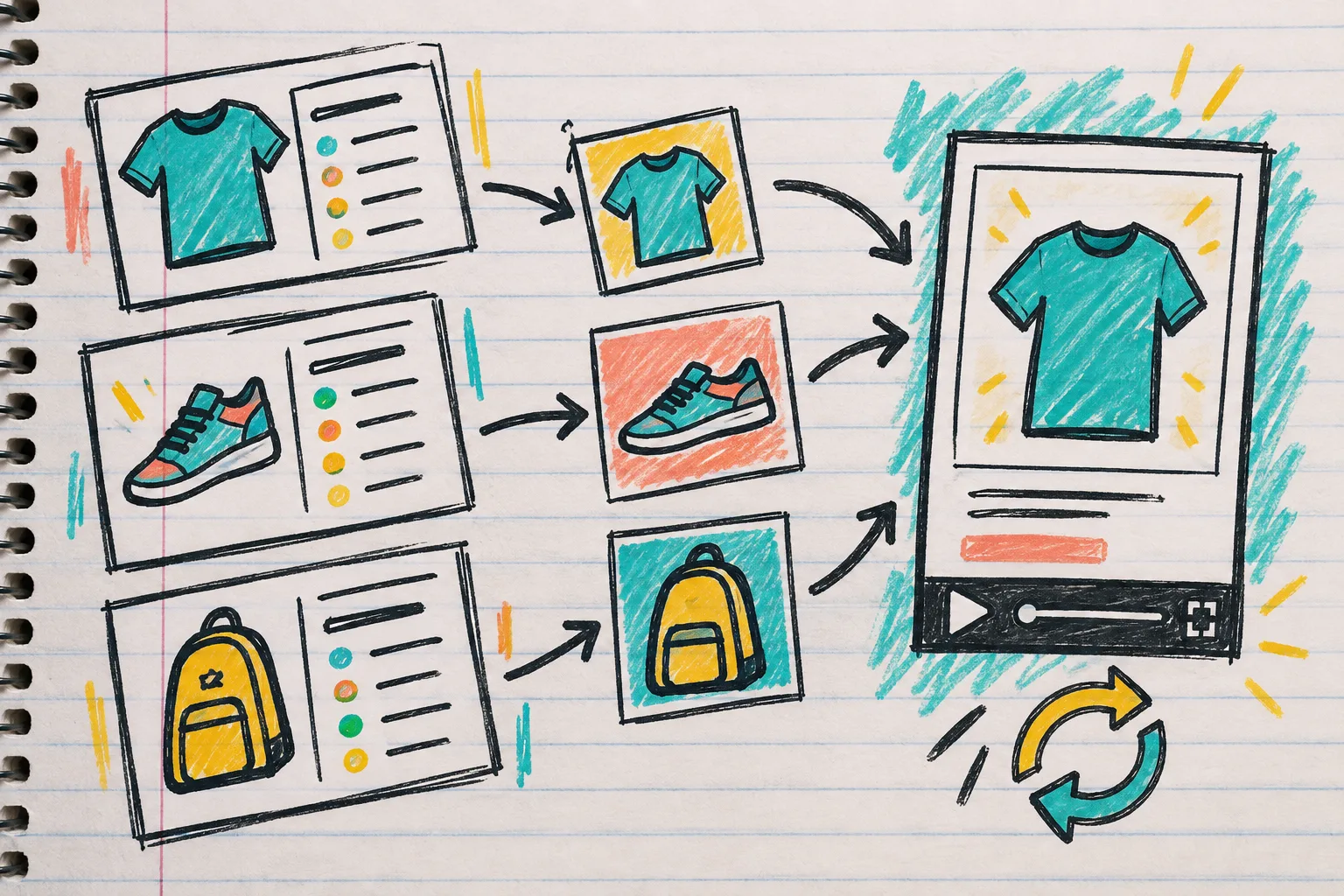 \n\nThat structure is where VideoFlow earns its place. A video can be authored in a TypeScript builder and compiled into VideoJSON, a portable representation that is easier to store, compare, edit, preview, and render than an isolated final file. The template is not just a visual design. It becomes a repeatable data contract.\n\n## I separated locked decisions from editable ones\n\nThe trick was to write down what must stay fixed and what can move. This sounds obvious, but it stopped our “just one small change” requests from silently becoming custom video production.\n\nI usually lock:\n\n- Brand typography and core colors.\n- Aspect ratio and safe-area margins.\n- Required legal or product-information scenes.\n- Audio level rules and caption styling.\n- The approved transition and motion set.\n\nI usually leave editable:\n\n- The product image chosen for the opening frame.\n- Headline and call-to-action copy within a character limit.\n- A small choice of approved scenes.\n- Clip timing within a narrow range.\n- Product-specific captions and localized text.\n\nThe line is not permanent. If people keep requesting the same escape hatch, it probably deserves to become an explicit template field. That is much healthier than asking them to remember a special workaround.\n\n## The editor is an exception desk, not a cockpit\n\nOnce a draft exists, I want the user to see the live result before it costs a server render. VideoFlow’s DOM renderer can show the same VideoJSON as a scrubbable browser preview. When an edit is genuinely needed, the React video editor can be embedded as the deeper tool: multi-track timeline, trimming, reordering, keyframes, transitions, effects, uploads, undo, and MP4 export.\n\n
 \n\nBut I do not lead with the full editor. Most people should start with the constrained controls. The full timeline is there for the cases where a product needs an unusual crop, a scene should be reordered, or the draft needs a human touch.\n\nThat distinction matters for product design. If every user sees a complex timeline first, the system feels like editing software. If they see a clear draft with a few relevant choices, it feels like a product-video generator that respects their judgment.\n\n## I kept the source of truth as data\n\nAn editable workflow becomes fragile when the preview, the saved draft, and the final MP4 are three different things. I keep the VideoJSON as the source of truth and store it with the template version, product references, approved assets, and edit history.\n\nThat lets me answer practical questions later. Which template created this clip? What did the user change? Can we regenerate it in another language? Can the same project be rendered in the browser for a quick export and on a server for a campaign batch?\n\nVideoJSON makes those questions approachable because the video is represented as structured data. The same project can move from a live preview to a server renderer without someone rebuilding it by hand. It is also a reasonable target for an agent or a form-driven app: the system can generate a draft, validate the allowed fields, and hand the result to a person for review.\n\n## The approval moment needs to be boring\n\nWhen a user is happy, I freeze an approved snapshot. That snapshot, not the still-editable draft, goes to the final renderer. If a render fails, the retry uses the same snapshot. If a user changes copy after approval, that becomes a new revision.\n\n
 \n\nThis is a small operational detail with a large effect. It keeps a late edit from changing a job already in the queue. It gives the team a traceable answer when someone asks why a published clip looks a certain way. And it makes rendering feel like a dependable final step instead of a mysterious transformation.\n\n## What I would build first\n\nI would start with one template and five editable fields: opening image, hook, CTA, one scene choice, and caption language. I would show a live preview, save the underlying VideoJSON, and add a clear approve button. That is already enough to turn product data into a usable, reviewable video workflow.\n\nThe full editor can arrive later, when users genuinely need it. More control is not automatically more helpful. The best escape hatch is the smallest one that lets a person save a good draft without escaping the system entirely.\n\nThat is the version of automation I trust: the template handles repetition, the person handles taste, and the final video retains a clear record of how it came to be.
I Kept the Template but Added an Escape Hatch for Product Videos
Why a constrained video template works better when the people using it can make a few real editorial decisions before rendering.