
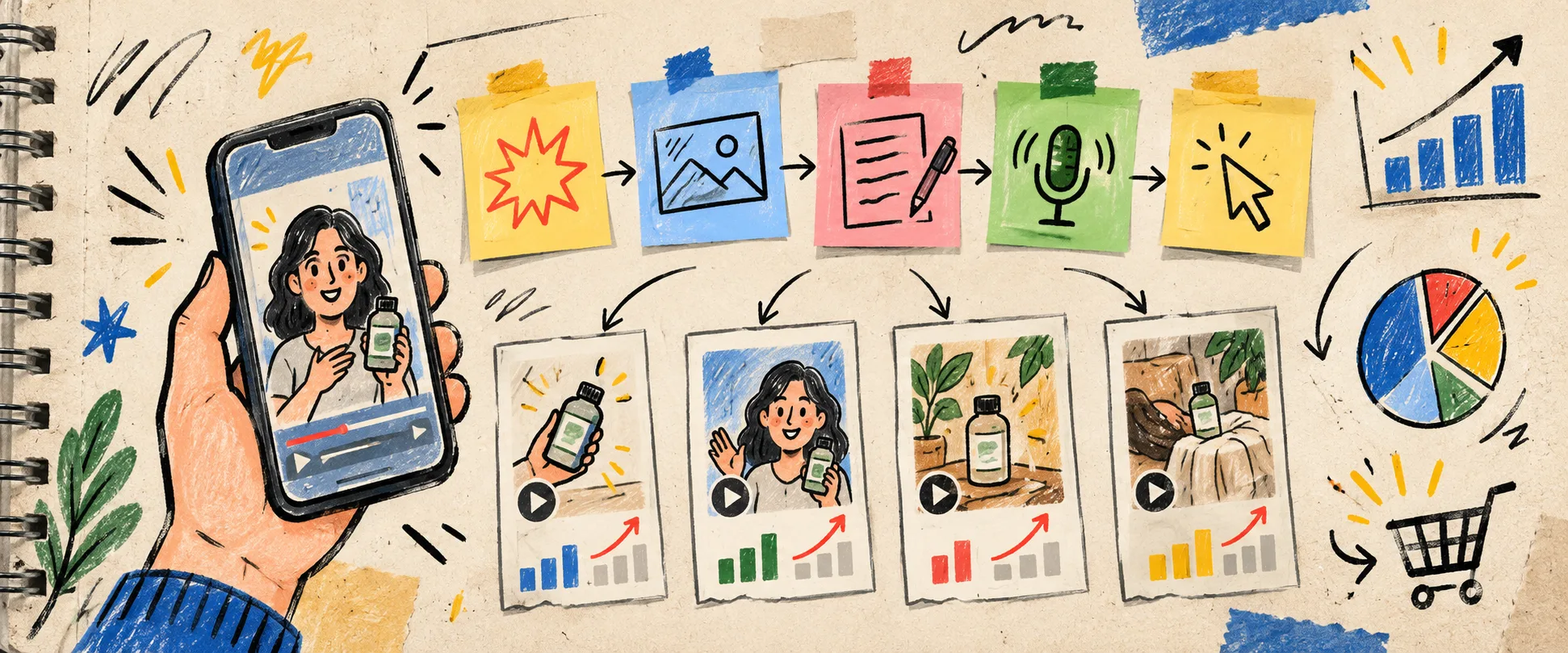
I used to treat a new product video as a request for more content. That framing made every campaign feel expensive: new creator brief, new shoot, new edit, new wait.
What I needed was a smaller repeatable decision: one product, one customer problem, and a few deliberate variables to test. That is where an AI UGC video workflow earns its keep. It is not a replacement for customer proof or a great creator relationship. It is a way to make the early creative-testing loop less precious.
For this field note, I sketched the system I would use with Supra UGC Maker: turn one Shopify product into several UGC-style video concepts, keep the variables visible, then promote only what gives the next test a reason to exist.

Start With a Testable Job, Not a Video Idea
The useful unit is not “make a Reel.” It is a buyer question. For a skincare product, it might be “Will this fit into my rushed morning?” For a kitchen tool, it might be “Can I see how it solves the annoying cleanup step?”
Write that question at the top of the brief, then lock the product reference and the one action you want after the video. This prevents the familiar five-minute script that tries to explain every feature, every offer, and the brand origin story all at once.
My minimum brief has five notes:
- Audience moment: who is stuck, skeptical, or comparing?
- Hook: what makes the first two seconds worth watching?
- Proof: product close-up, use case, or straightforward demonstration.
- Angle: the promised payoff—speed, clarity, comfort, confidence, or convenience.
- Next action: view the product, add to cart, or learn the details.
That is enough structure to use Supra UGC Maker’s avatar, scene, product reference, script, and voice controls without creating a vague “AI influencer video.” The app lets a merchant build and preview those scenes, generate segments, and revise or regenerate clips in a reusable project.
Change One Meaningful Variable Per Version
The fastest way to learn nothing is to change the hook, avatar, setting, script, and CTA in every variation. When a clip wins, you cannot tell why. I use a four-column notebook matrix instead:
| Variable | Example A | Example B | What I am learning |
|---|---|---|---|
| Hook | “I stopped doing this before work” | “This fixed my two-minute problem” | Which tension earns attention? |
| Presenter | Friendly peer | Calm expert | Which delivery suits the product? |
| Scene | Bathroom shelf | Bright studio | Which context makes use clearer? |
| CTA | See how it works | Shop the product | Which next step matches intent? |
Pick one row for the first round. Keep the product visual, core proof, and offer steady. A good first batch is four clips: two hooks times two delivery styles. That is enough contrast to learn from, but not so many versions that the review step turns into another production project.
This is the step I wish I had before building the broader Shopify UGC test matrix. The matrix is not bureaucracy; it is a guardrail against “we made more videos” being mistaken for a plan.
Make the Project Reusable
Once a base scene works, save it as the working template: the right product reference, an approved visual environment, the voice/tone that fits, and the short proof beat. The next variation should begin from that project, not a blank canvas.
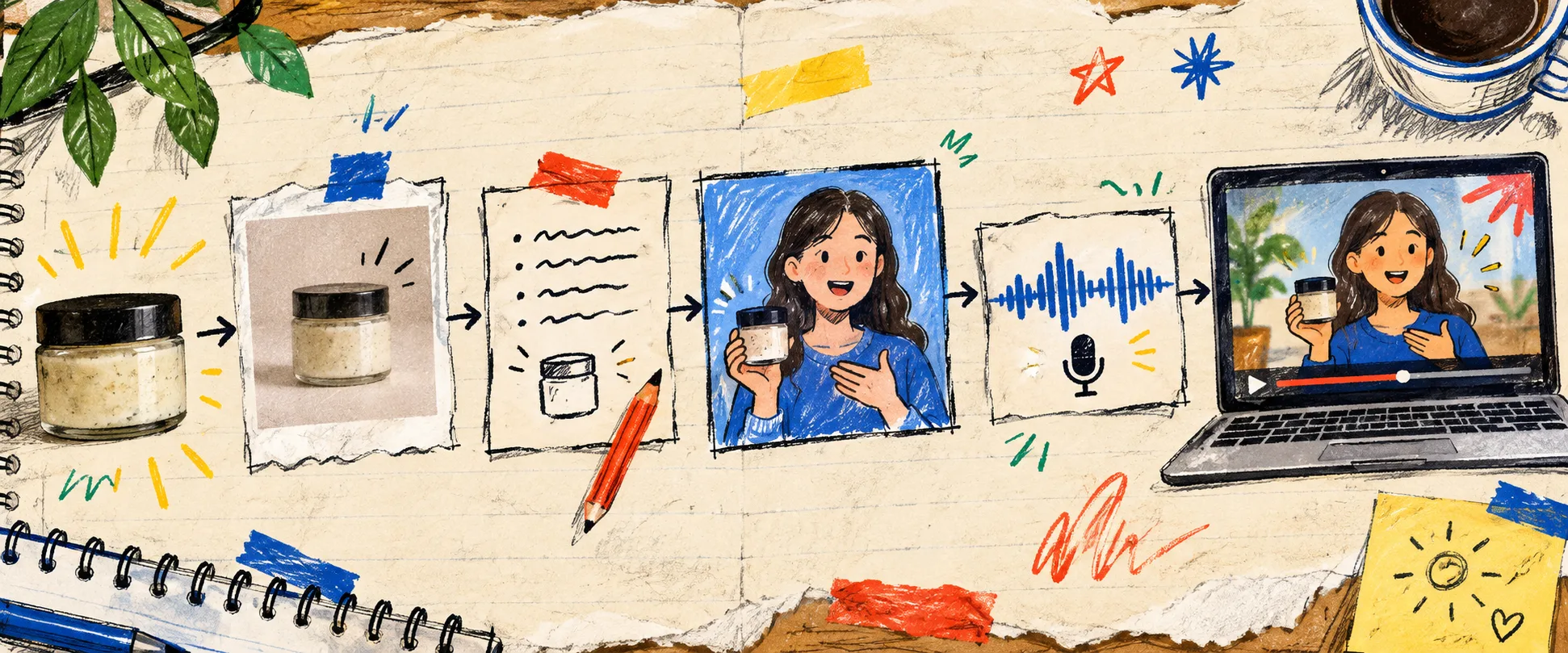
A simple build sequence looks like this:
- Choose a preset avatar or create a custom AI model appropriate to the audience.
- Add a scene that gives the product a believable use context—studio, home, boutique, or outdoors.
- Feature the Shopify product and check that the important detail is visible.
- Write a single-idea script, then choose the voice and tone.
- Preview the scene before generating, then reorder, trim, update, or regenerate clips only where the test calls for it.
That reuse matters when you are moving from ad exploration to something more durable. A short concept can become a product-page explainer, then an email teaser, without pretending those placements need the exact same edit. I used that same “review before scale” habit in a launch video workflow; it protects the team from shipping a technically finished clip that answers the wrong question.
Place the Winner Where It Can Do Different Work
A winning paid-social hook is useful, but it is only one job. The same product story can travel if you reshape the next action around the channel:
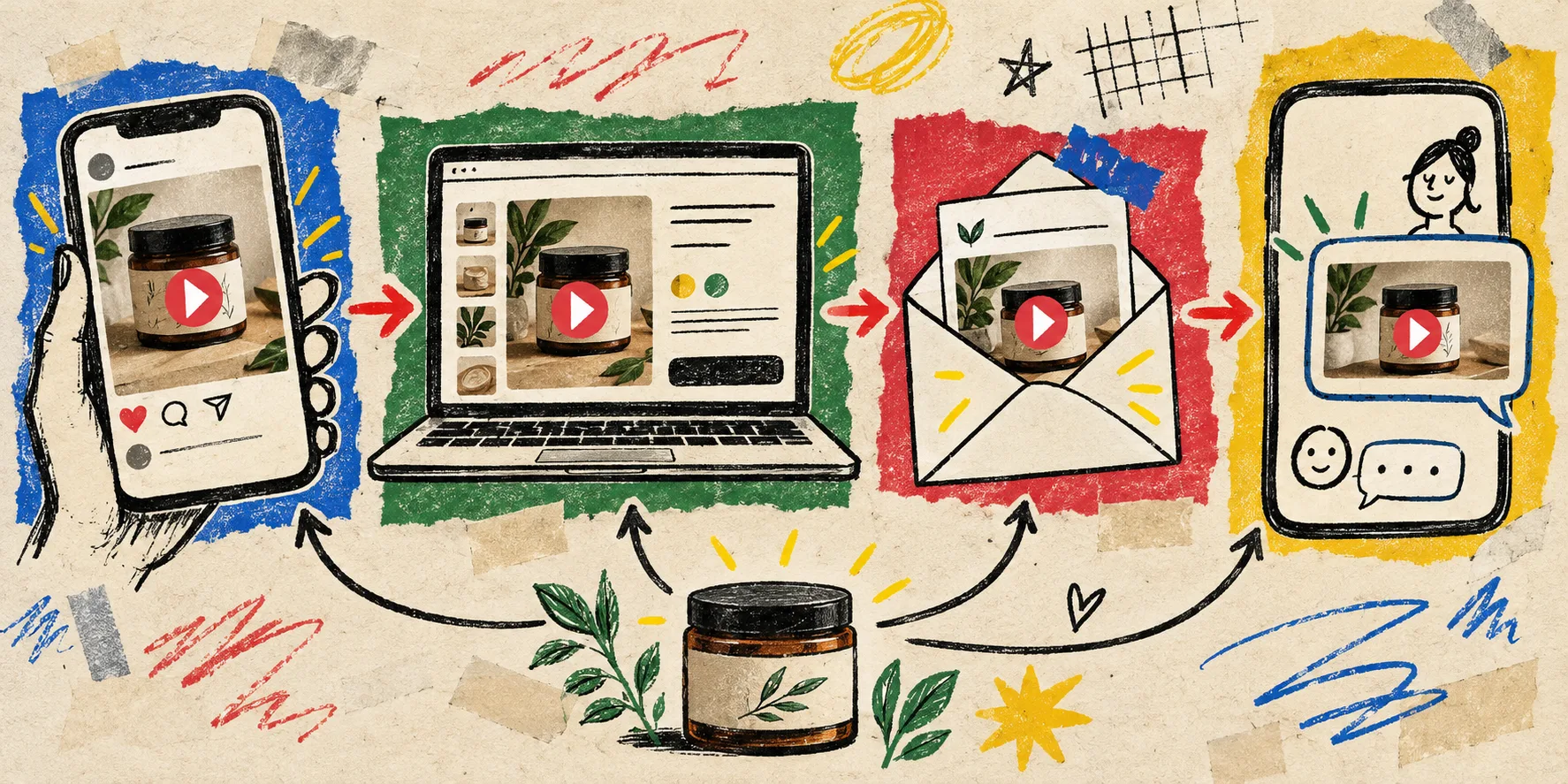
- Paid social: lead with the interruption and test the hook.
- Product page: slow down enough to show the product and resolve the key objection.
- Email: use a teaser to give the click a concrete reason.
- Post-purchase: replace the sales claim with a setup or usage tip that reduces confusion.
This is also why a single customer objection can be a better brief than a generic campaign theme. The one-objection UGC approach is a handy reminder: the next video earns its slot by clarifying one thing, not by looking busier. For a product-page placement, the complementary question is whether the video makes the physical product easier to understand; I have used a similar audit mindset for Shopify product media.
Keep the Honest Boundary
AI avatar product videos are strong for scalable creative testing, explainers, seasonal variations, and giving a small team more starting points. They are not a substitute for real customer testimony, community trust, or a creator whose relationship with an audience is the actual reason people listen.
That boundary makes the workflow more useful, not less. Let real creator content do the work only it can do. Let an AI UGC video generator make the routine “what should we test next?” work faster and more disciplined.
My Next-Run Checklist
Before I generate anything, I ask: does this version change one meaningful variable? Is the product reference accurate? Does the first beat name a real buyer tension? Can I explain what I learned if this clip wins?
If the answer is yes, I build the first small batch in Supra UGC Maker, review the previews, and put the clearest concept where it has a real job to do. Start with one product and four focused variations today; your next brief will be much easier to write.