
I keep seeing the same bottleneck in small Shopify teams: everyone agrees that video matters, then one product needs a new campaign and the whole thing quietly turns into a production project. Booking creators, waiting on samples, editing the first cut, asking for one more hook—the calendar wins before the test starts.
My field-note fix is a tiny UGC test matrix. The goal is not to pretend an AI avatar is a replacement for a real creator with a real audience. It is to get four clear UGC-style video angles in front of shoppers while the creative question is still fresh. Supra UGC Maker is the Shopify app I would use here because it lets me assemble an avatar, scene, product reference, script, voice, and tone, then revise or regenerate clips inside one project.

The rule: test one decision at a time
A messy test matrix changes the product, audience, promise, scene, and CTA all at once. When something works, you learn almost nothing. I start with one product and one audience, then make the first-second hook the main variable. Keep the offer and landing page steady for the first pass.
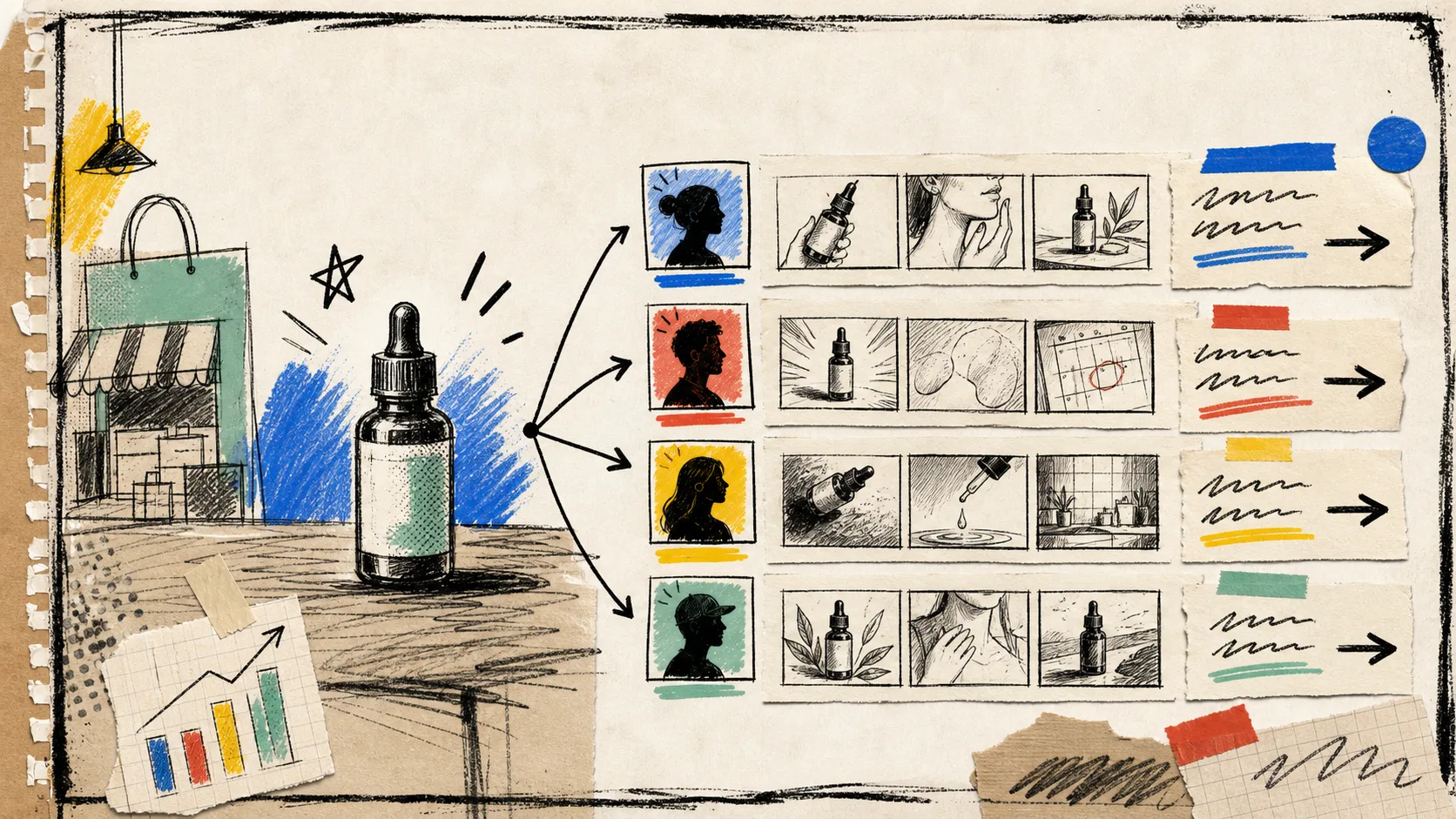
Here is the four-card version I sketch before opening any video tool:
- Problem hook: name the annoying moment the product removes.
- Use-it-with-me hook: show where it fits in a real routine.
- Proof hook: make one specific claim the product page can support.
- Objection hook: answer the hesitation that stops a first purchase.
For a skincare product, those may become: a rushed-morning problem, a three-step routine, a texture or application demonstration, and an answer to the “will this fit sensitive skin?” question. The product does not change; the reason to pause does. That is much more useful than making four nearly identical videos.
This is the compact version of the weekly creative practice I used in one Shopify product to a week of UGC video tests. The important part is the matrix, not producing video for its own sake.
Build each card from the same ingredients
For each angle, I fill in five small fields: avatar, scene, opening line, proof beat, and CTA. Supra UGC Maker supports preset or custom AI models, selectable scenes, product references, and scripts with a chosen voice and tone. That makes it practical to keep the baseline stable while testing one meaningful choice.
My rough brief looks like this:
- Avatar: approachable, product-category appropriate, consistent across the first round.
- Scene: choose one believable environment, not four random backgrounds.
- Opening line: the single variable for this card.
- Proof beat: product detail, use case, or demo that your PDP already explains.
- CTA: one next action, usually “see the details” or “shop the product.”
The preview step matters. I check that the product reference is visible, the script does not promise more than the page can deliver, and the voice actually suits the customer. Then I generate a short segment, not a cinematic manifesto. Clips can be reordered, trimmed, updated, and regenerated in the project, so the useful feedback loop is cheap: spot a weak first line, swap it, rerun it.

Give every video a job in the funnel
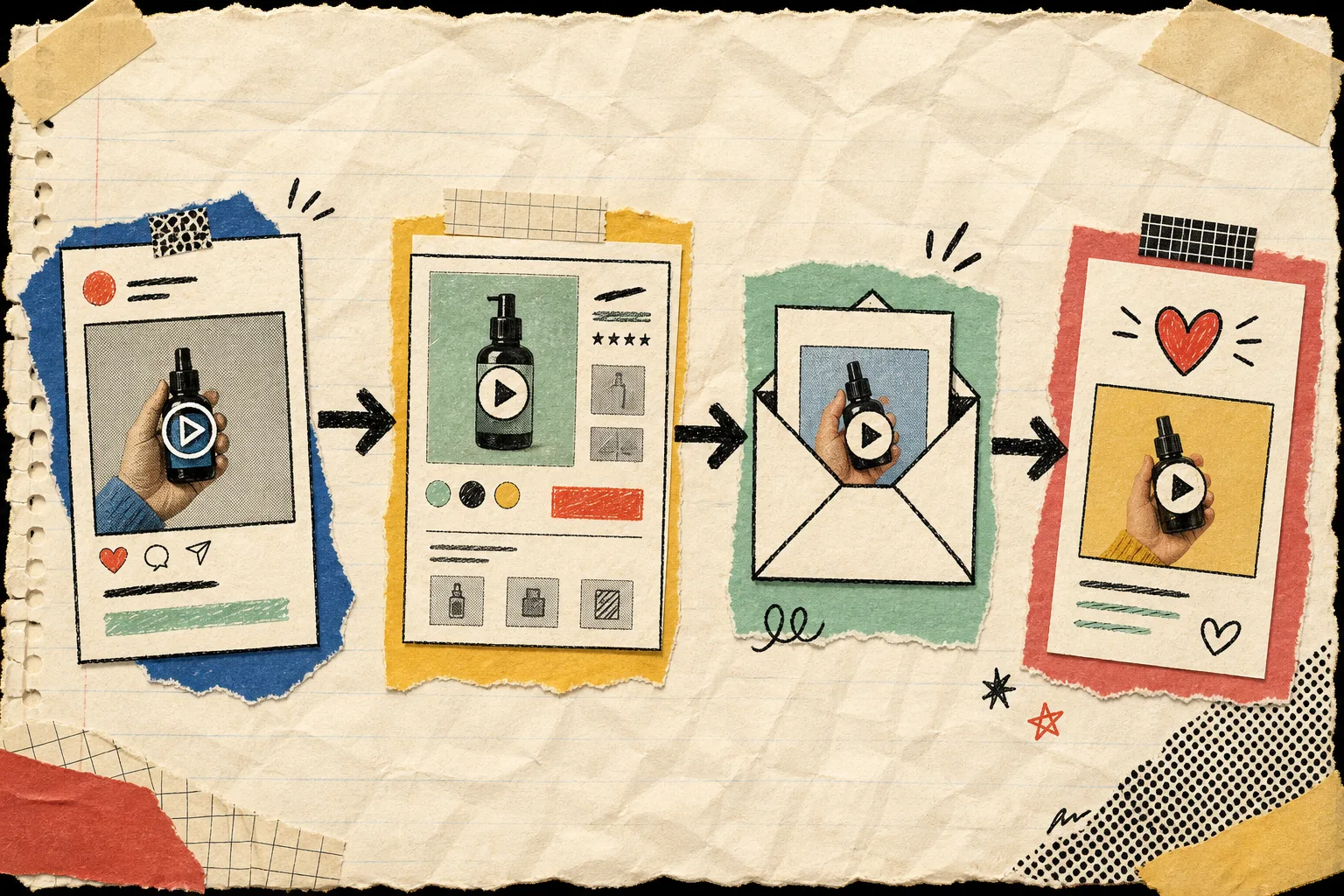
I do not dump every successful variation into paid social and call it a system. A problem-led cut is often right for a cold ad. A quick demo may work better beside the add-to-cart button. A reassurance-focused version can become an email thumbnail or a post-purchase explainer. The same source project can produce those variations without rebuilding all the assets.
That is why I keep a placement column beside the hook. It prevents the common “great video, wrong moment” mistake. If you are already building product-page video, the human-review checklist in this VideoFlow workflow is a useful companion: generation can be fast, but a person should still check the claim, product match, and destination before launch.
For more raw ideas, I would also keep the existing product-brief-to-UGC-ad workflow nearby. It is a good reminder that the best variation often begins as a better brief, not a more complicated edit.
The lean QA pass before spend
Before any money goes behind a clip, I run five checks:
- The product shown matches the product page.
- The script makes no unsupported claim.
- The opening is understandable with sound off.
- The CTA matches the destination.
- The cut has a clear owner and a one-sentence hypothesis.
That last one is the quiet MVP. Write “this objection hook will earn more product-page clicks from first-time visitors” before you launch. Otherwise, it is easy to celebrate a metric that does not answer the question you meant to test. For a wider grounding on what UGC-style creative can and cannot do, my earlier guide on creating Shopify UGC videos without hiring influencers makes the fair tradeoff: real creators still matter for genuine testimonials and community trust; fast AI-assisted variants are especially useful for testing, explainers, and campaign volume.
Start with four, not forty
The useful version of AI video marketing for ecommerce is not an endless content machine. It is a small, reviewable experiment that helps a Shopify team learn sooner. Pick one product, sketch four hooks, keep the proof and CTA honest, and give each video a specific placement. Then install Supra UGC Maker on Shopify or try its free plan, build your first four-card matrix, and let performance—not production anxiety—tell you which angle deserves the next iteration.