
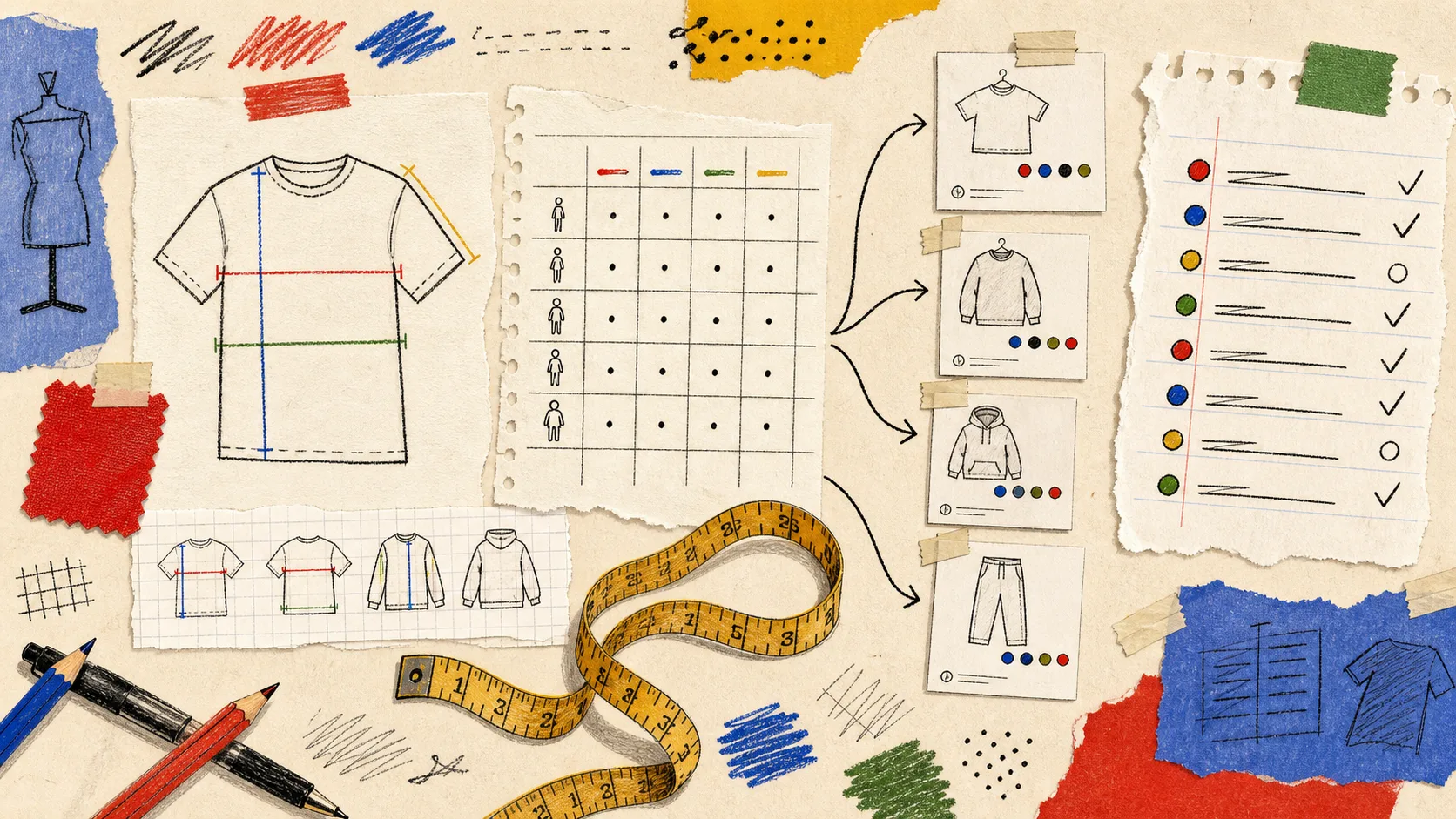
I have made this mistake often enough to write it in the margin: a collection can have good product photos, tidy variants, and a launch date, then still create a week of avoidable customer questions because the size guide was treated as a last-minute table. Before the next apparel drop, I now audit the size-chart system itself—where the measurements came from, who the chart reaches, and what a shopper sees when they are deciding.
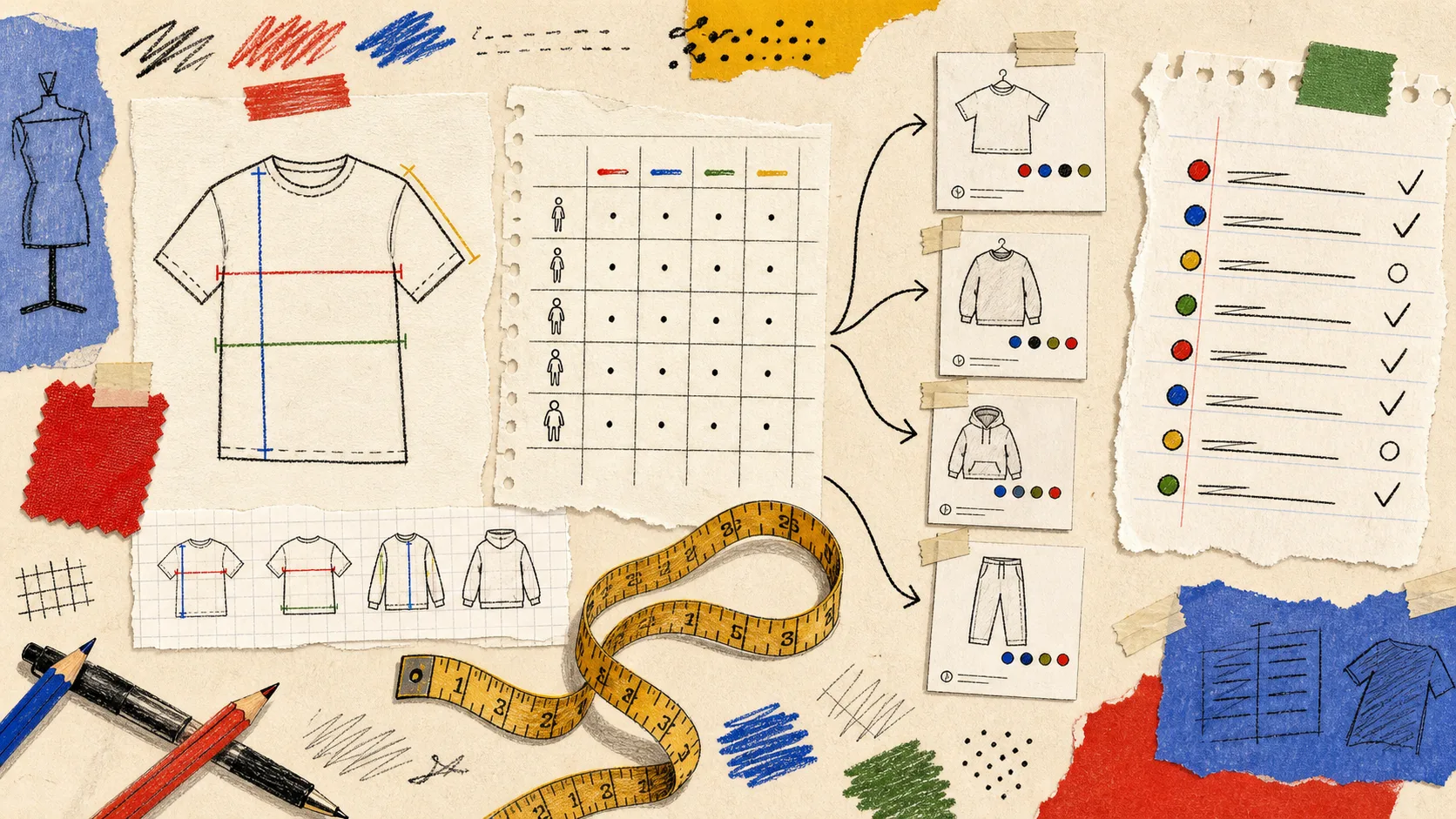
The useful shift is to treat sizing like catalog data, not product-description decoration. With Supra Size Chart, I can create a chart centrally, pair it with a measurement guide, and assign it using product, collection, product type, vendor, or tag rules. That makes an audit small enough to finish before launch rather than a hunt through hundreds of product descriptions.
My Eight-Title Scratchpad
I sketched these eight SEO angles before choosing this one:
- How to Audit Shopify Size Charts Before a New Collection Launch
- The Shopify Apparel Size Guide Checklist I Use Before Publishing
- How to Find Size-Chart Gaps Across a Shopify Collection
- Shopify Size Chart Rules: A Practical Collection Coverage Audit
- Why Garment Measurements Need a Pre-Launch Shopify Check
- A Merchandiser’s Guide to More Useful Shopify Size Charts
- How to Review Size Guides Before Apparel Products Go Live
- The Lean Shopify Size-Chart Audit for New Apparel Drops
The first title won because it names the job and the moment it matters. Here is the actual field-note version.
1. Start with the measurement source, not the old table
First, I pick one representative garment from each fit family: a regular tee, an oversized tee, a cropped layer, a fitted dress, or whatever genuinely changes how a customer chooses. I lay it flat without stretching it, then record the measurements the chart promises to represent.
A chart does not need every possible dimension. It needs the dimensions a shopper can reproduce, plus a short note when the number is a garment measurement rather than a body measurement. A chest-width measurement taken flat and a body-chest recommendation are different things; mixing them without an explanation makes a precise-looking table less useful.
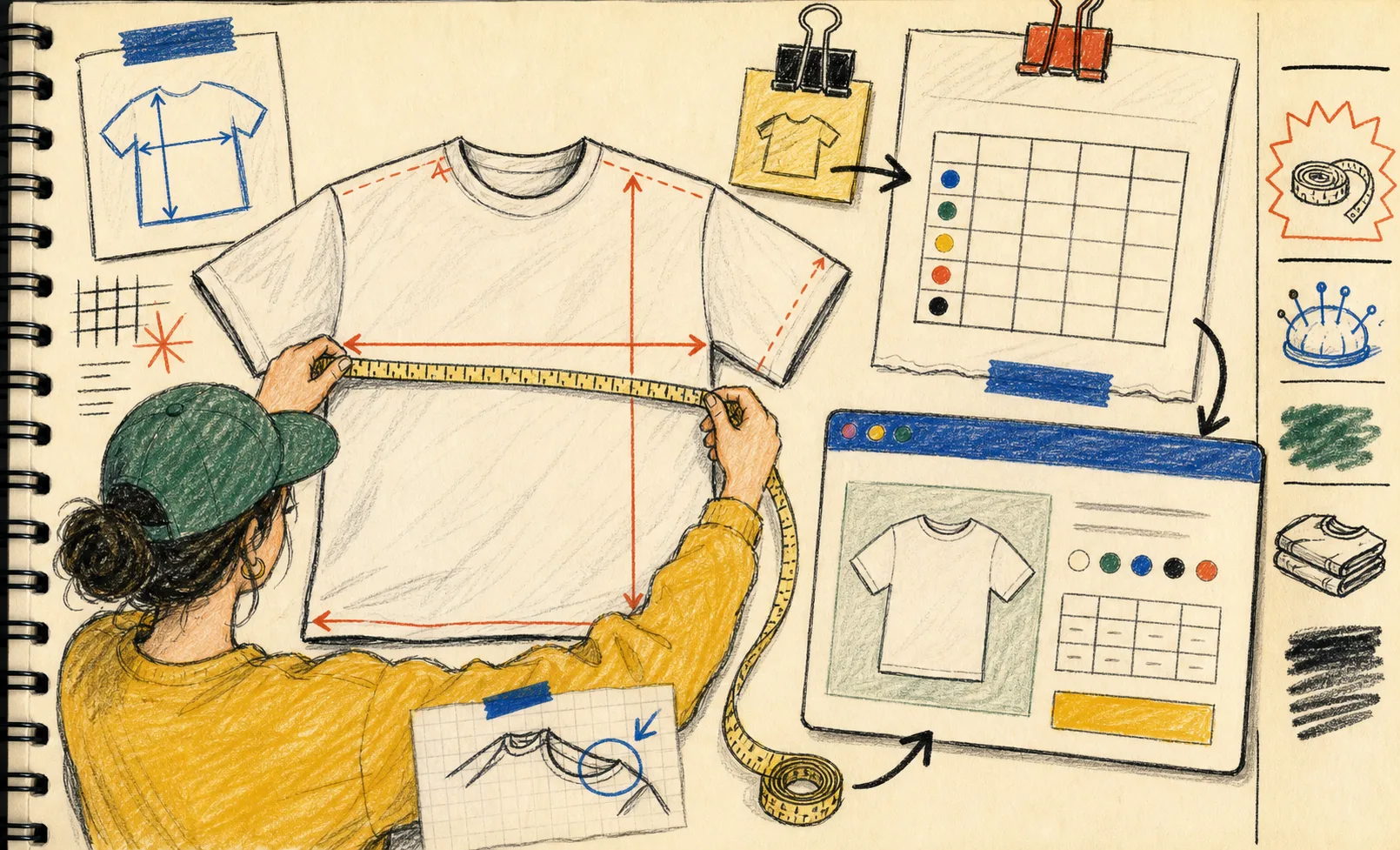
This is where a labelled measurement guide earns its spot. If the chart says body length or inseam, show the line on the silhouette. Supra Size Chart lets the guide be reused across charts, so I do not have to redraw the logic every time a seasonal colourway appears. For a deeper customer-measurement pass, this guide on helping shoppers measure at home is a useful companion.
2. Separate charts when the fit story changes
I do not create a separate chart merely because a product has a new title. I split it when the fit changes: a relaxed hoodie versus a slim hoodie, adult versus youth sizing, or footwear versus apparel. The check is simple: would a shopper need different measurements or a different instruction to choose with confidence? If yes, it deserves its own chart.
Then I look for accidental near-duplicates. Three charts with the same rows but tiny inconsistent notes are more expensive to maintain than one shared chart with a clean assignment rule. The app’s spreadsheet editor and CSV import make consolidation realistic; its CSV and JSON export also means the data remains portable rather than trapped in a widget.
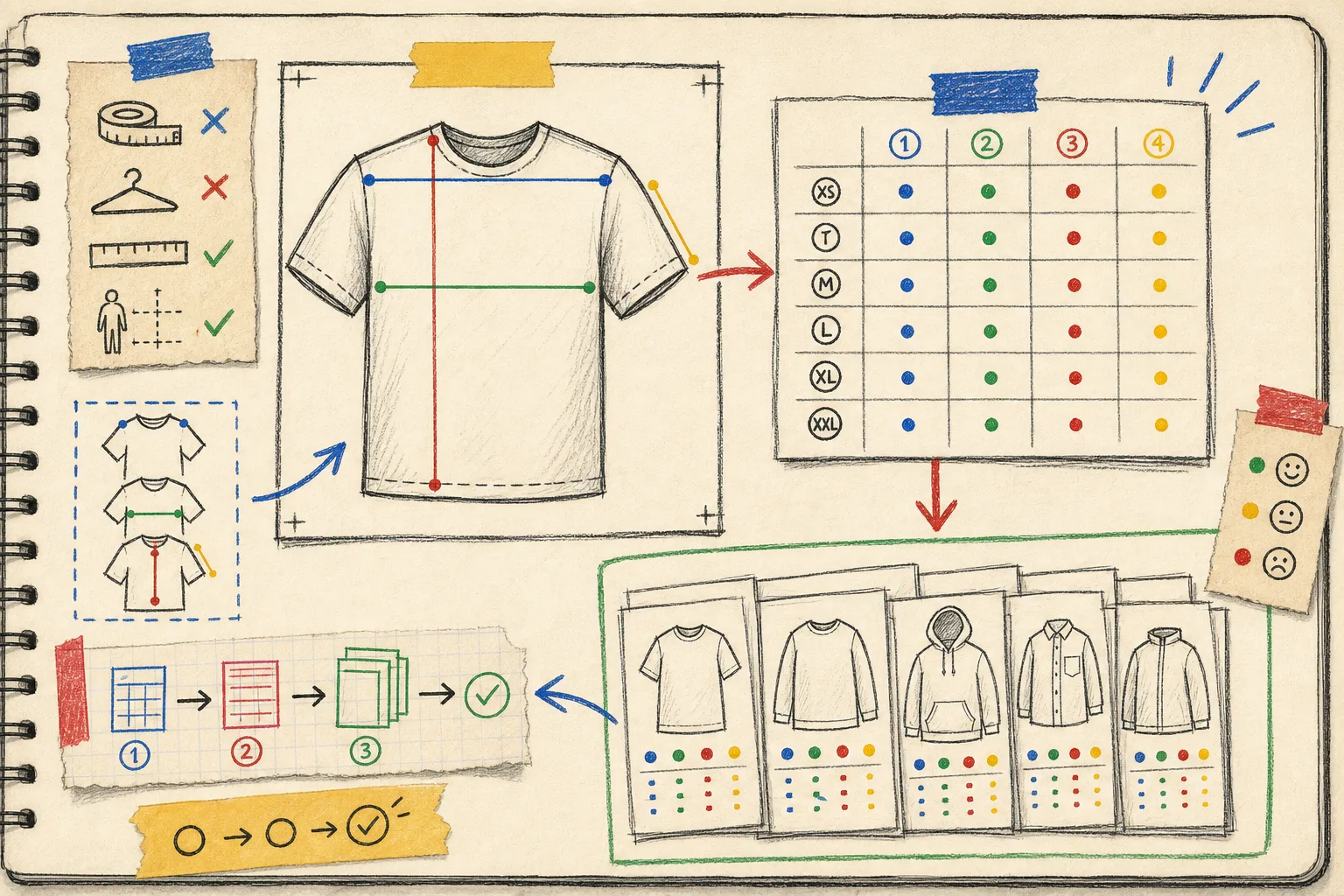
3. Trace coverage from the collection outward
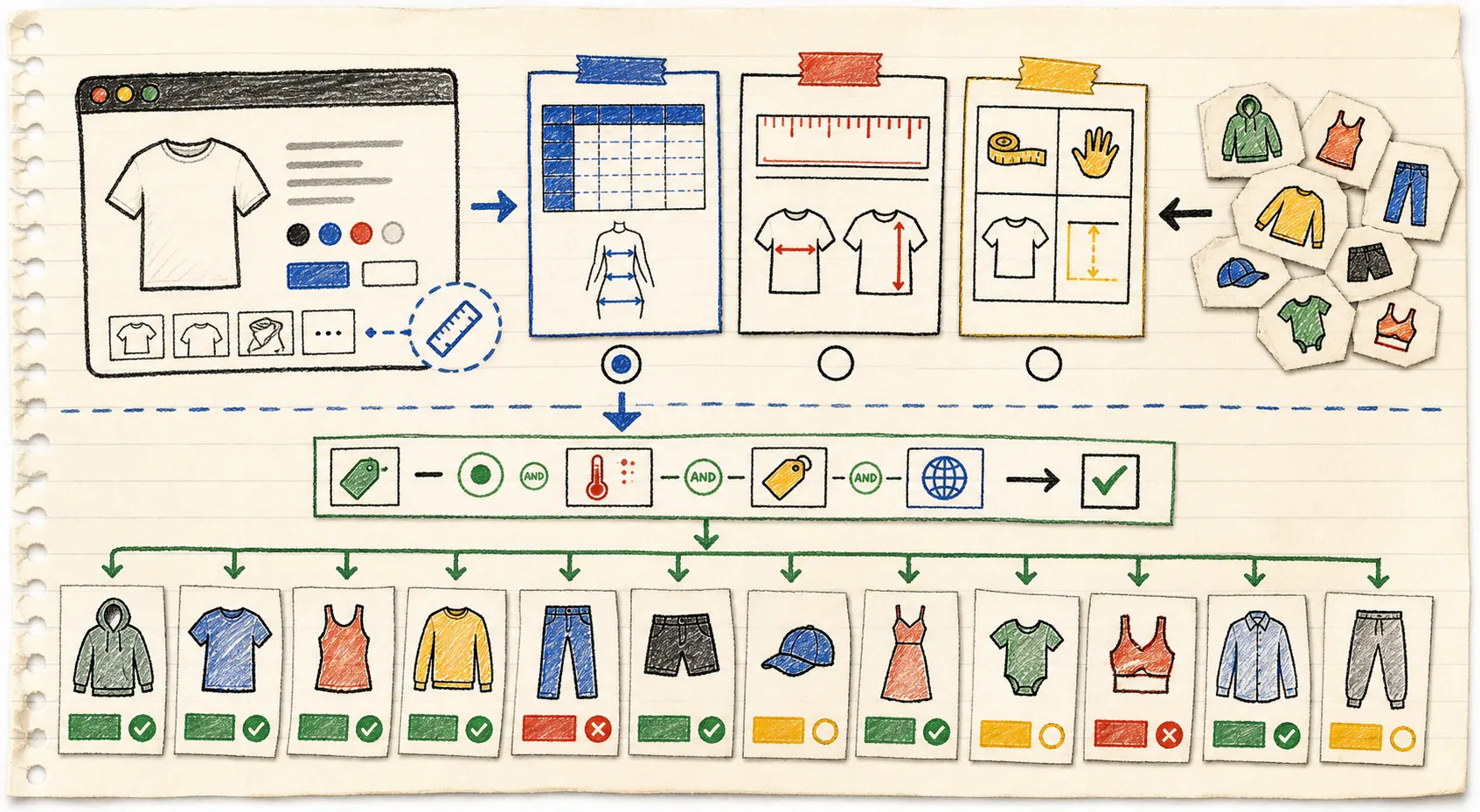
This is the part I used to skip. I open the new collection and make a short list of its product types, vendors, and tags. Then I verify that the intended assignment rule covers each family—and that a more-specific product rule is not quietly winning where it should not.
A collection rule is the tidy default for a coherent apparel drop. A product-type, vendor, or tag rule is often better for a mixed catalog. The goal is not clever rule architecture; it is making sure a product added tomorrow inherits the right chart without another manual edit. This is the same discipline behind setting up size charts that update across a Shopify catalog.
My quick audit list is:
- Every launch product matches one intentional chart or the store-wide fallback.
- The most-specific matching rule is the one I expect.
- Products with a genuinely different fit are excluded from the shared rule.
- A new tag or collection membership will not leave a future product uncovered.
4. Check the shopper’s view on a real product page
A correct chart can still be badly placed. I test it in the theme where customers actually choose variants: desktop and phone, a light surface and a dark surface if the theme supports both, and a product with enough page content to make the decision area real.
Inline works when sizing is central to the purchase. An accordion keeps a dense product page calmer. A modal button is useful when the table is detailed, but it needs an obvious label and a quick way back to the variant selector. Supra Size Chart’s theme app block supports all three patterns and follows the theme’s text colours, so the test is about discoverability rather than fighting a foreign widget. If you are deciding between those placements, the launch checklist for apparel size guides has a useful second opinion.
5. Make unit choice a shopper decision
For cross-border catalog traffic, I also check whether the displayed unit matches the reader’s likely habit. Centimetres and inches are not a cosmetic preference when someone is measuring a garment at home. The optional metric/imperial toggle in Supra Size Chart lets shoppers move to the counterpart of the same scale, which is cleaner than duplicating every table by hand.
The important audit question is whether the original values and the conversion are clearly named. Keep a unit in each column header, do not round so aggressively that adjacent sizes collapse into the same value, and keep the measurement note close to the chart. The goal is not to look international; it is to make the choice understandable.
One final pass before publish
Before I call a size-chart setup finished, I pick three products at random: one obvious match, one edge case, and one product that should not receive that chart. That tiny test catches a surprising amount of rule drift. I also save an export before major changes, then publish the theme block only when the chart, guide, rules, and display all agree.
A size guide should answer a nervous shopper in the moment, not turn them into your next support ticket. If your next collection still depends on tables pasted into product descriptions, start by creating one central chart in Supra Size Chart, assign it to a small fit family, and run this audit on three live product pages today.