
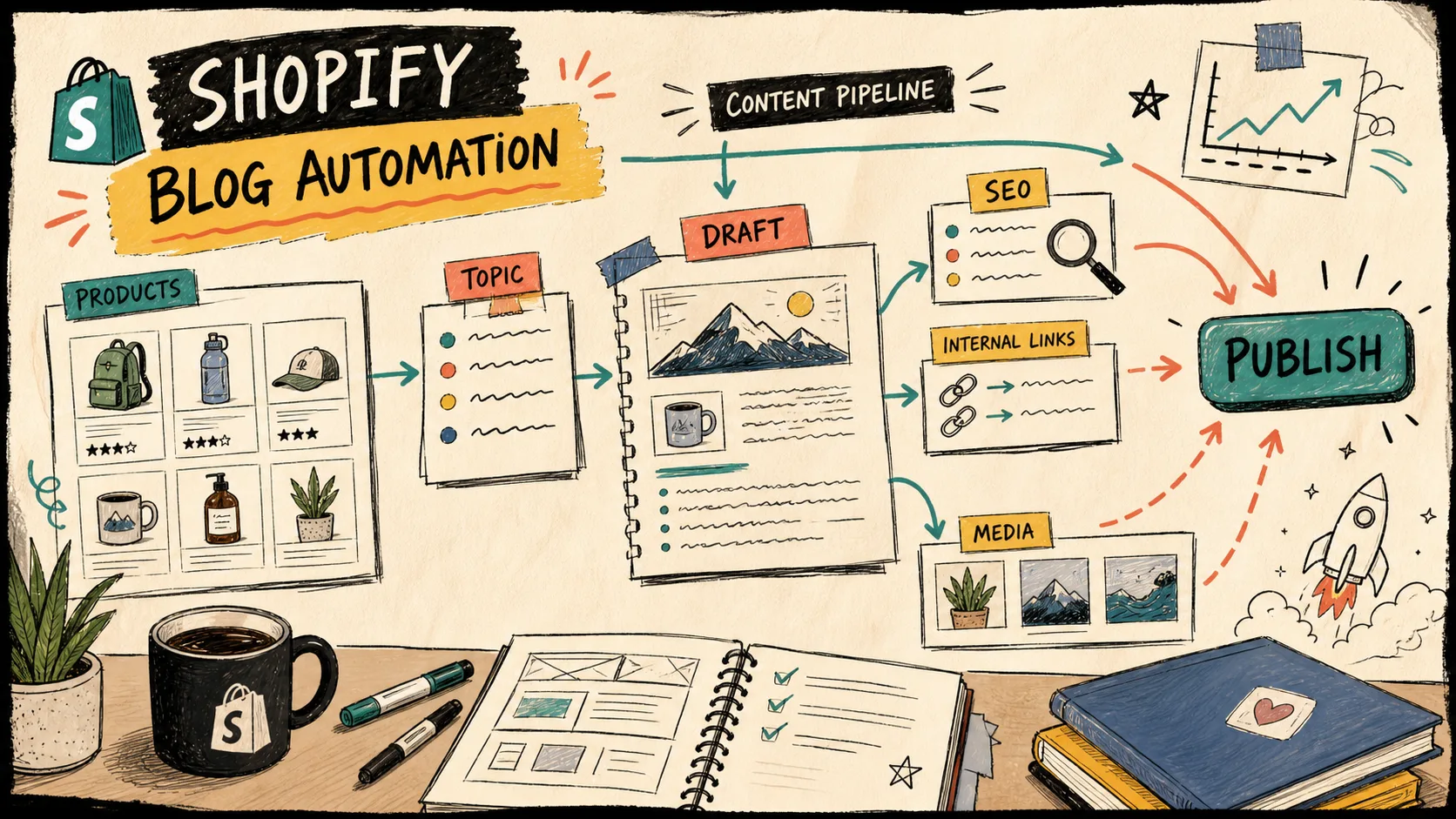
How I Turn Shopify Product Context Into Blog Posts That Rank
I used to treat blog automation like a shortcut around the hard part. In practice, the hard part was always the same: making sure the post still sounded like it came from a real store with real products, not a generic AI mill with a keyword pasted into the top.
That is why I keep coming back to Supra Blog Automation when I need a Shopify blog workflow that is more structured than a blank document and less brittle than a hand-built content calendar. It is built to generate SEO-focused posts, work from product context, add visuals, and either publish immediately or save as a draft for review. The Shopify App Store listing is the other place I send people when they want the app details first.
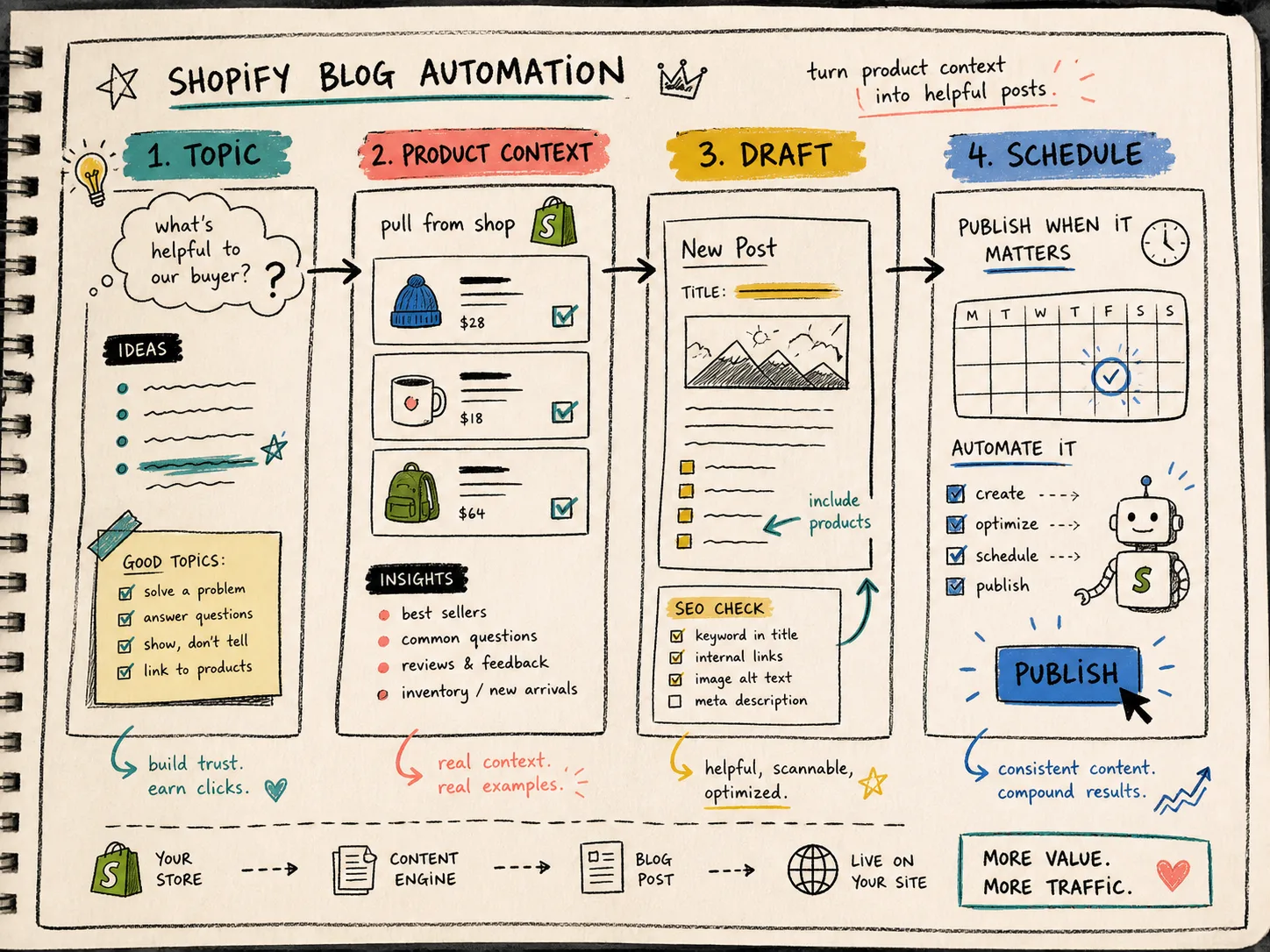
Start With Product Context, Not a Topic Spinner
The mistake I kept making was starting with a keyword and then trying to force a useful post out of it.
That usually gives you the wrong shape. A better prompt is not “what should I write about?” It is “what product, collection, or customer problem should this post actually help?”
Supra Blog Automation is useful here because the product is not just a text generator. The brief says it supports product-aware content, product and collection promotion, SEO-focused structure, and store-ready output. That means I can give it enough context to make the article feel like part of the store instead of a detached blog post.
When I build the prompt, I keep it simple:
- one product or collection;
- one customer question;
- one SEO goal;
- one CTA;
- one visual angle.
That is enough to stop the article from wandering.
Give the Post a Real Job
The best Shopify blog posts do not exist just to exist. They should do something useful for the store.
Sometimes the job is discovery. Sometimes it is comparison. Sometimes it is support, education, or seasonal demand capture. The app is built for those kinds of posts, so I think in terms of outcome first and keyword second.
This is the part that makes the output better than generic AI copy:
- it keeps the article tied to a real product or collection;
- it encourages a clean SEO structure;
- it gives me a place to add internal links;
- it leaves room for product promotion without sounding pushy.
That last point matters. A post can mention products naturally and still feel helpful. It just needs a reason to exist beyond “please buy this thing.”
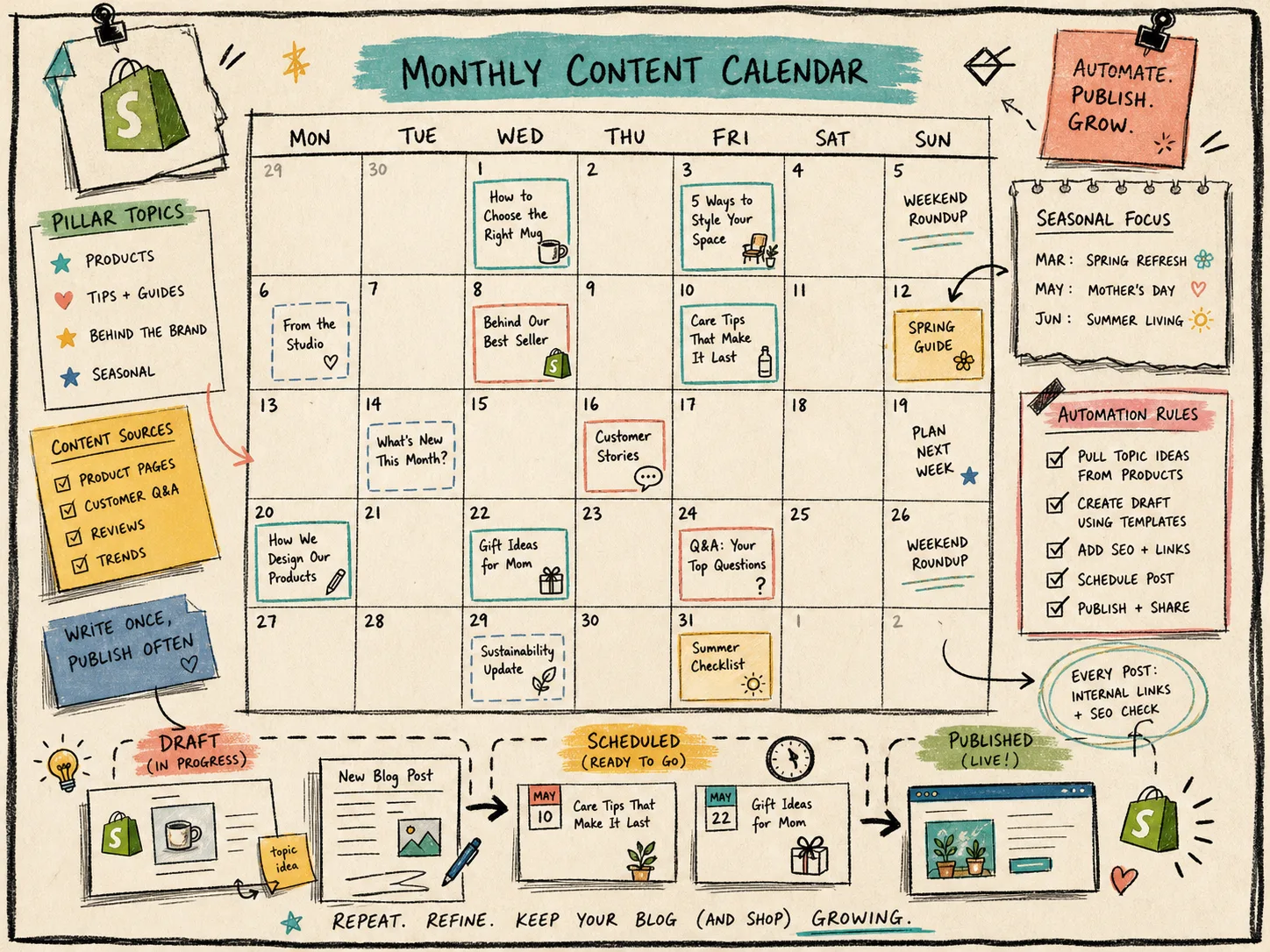
Let Recurring Automations Handle the Boring Work
I do not want to manually decide every time whether a blog should go live. Some posts are worth reviewing closely. Others are routine enough to schedule and move on.
Supra Blog Automation supports recurring automations, which is the part I would use for the boring, repeatable content that keeps a store visible:
- seasonal roundups;
- product education posts;
- collection spotlights;
- launch support articles;
- recurring SEO content tied to promotions.
That is where the calendar really helps. A blog does not stay active because I feel inspired. It stays active because the workflow is small enough to repeat.
I already wrote about the broader content rhythm in How to Build a Shopify Content Calendar That Writes Itself, and the same logic shows up again in How to Automate Shopify Blogging Without Losing Product Detail. The point is not to publish more just because the machine can. The point is to publish on schedule without losing the store context that makes the post worth reading.
Keep Draft Review in the Loop
I would not publish every generated post blindly.
The product explicitly supports publishing immediately or saving as draft, and that is exactly the control I want. If the post includes product claims, policy-sensitive language, or anything I have not checked, I want a review step. If the post is low-risk and structurally predictable, I can move faster.
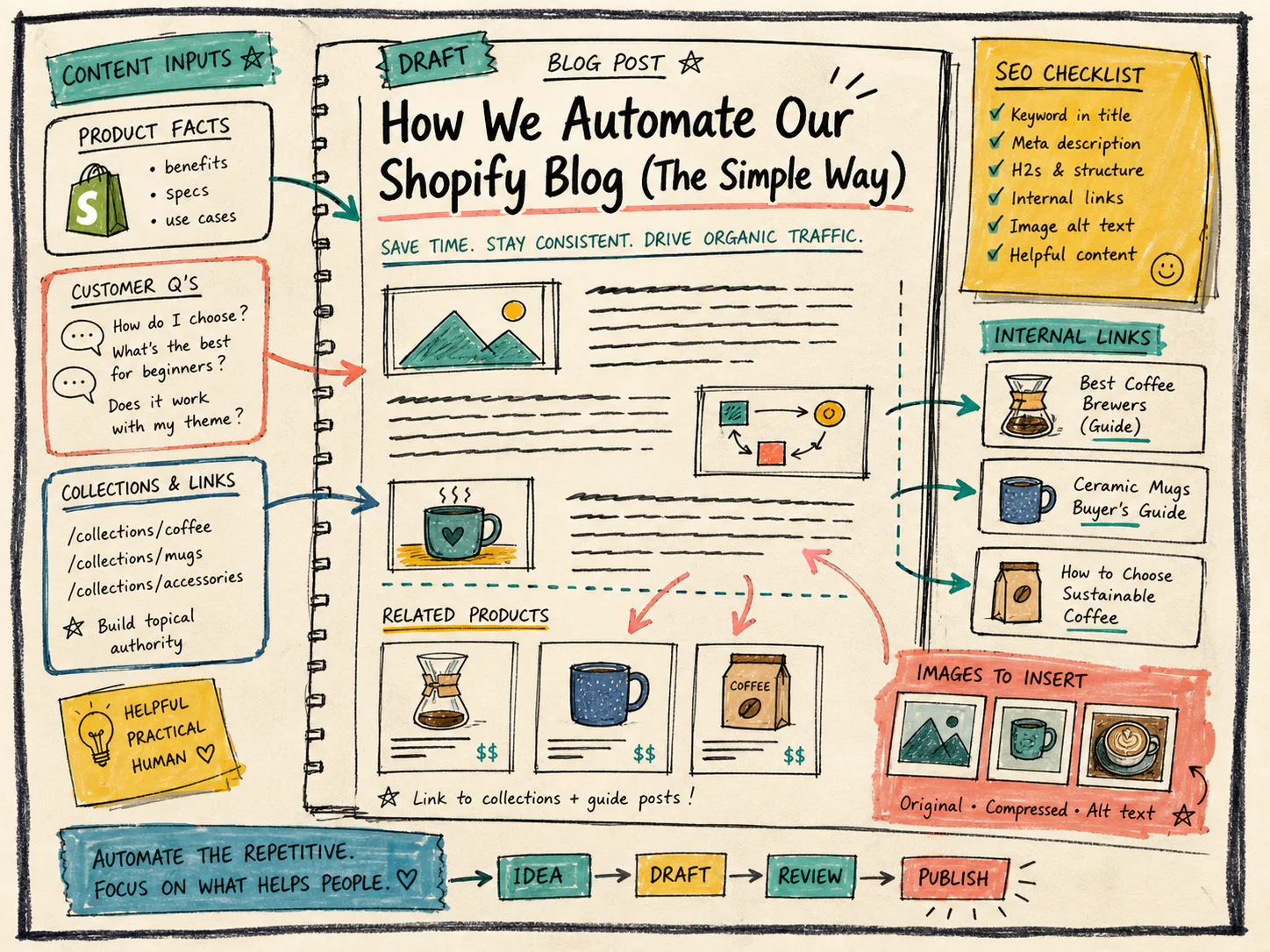
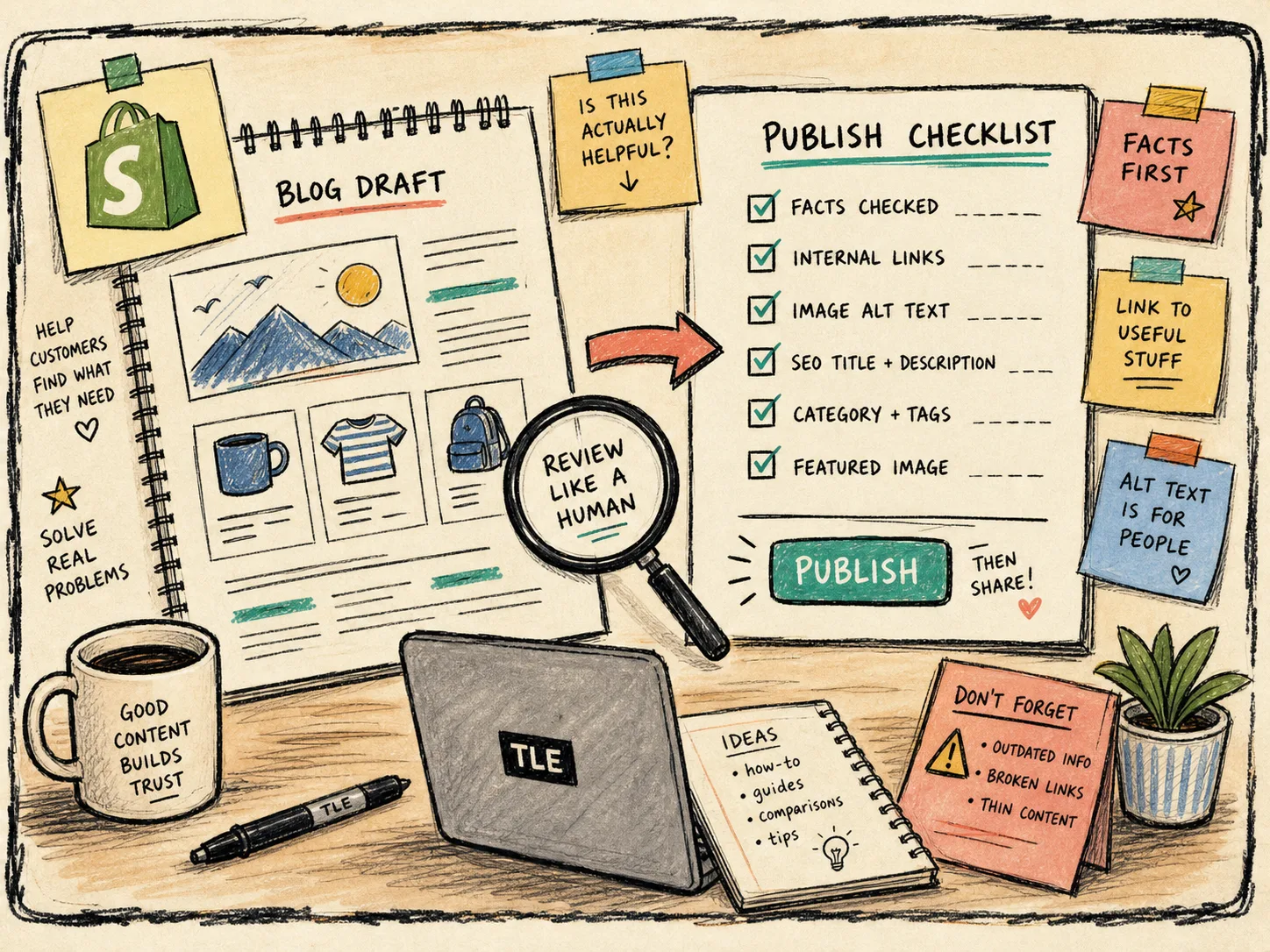
My review pass is short and boring:
- Check that the product facts are right.
- Check the headings against search intent.
- Check that internal links actually help the reader.
- Check image alt text and captions.
- Check whether the CTA sounds like the store.
That is enough to catch the mistakes that matter without turning the whole workflow into a bottleneck.
If you want a more explicit version of that step, How I Write Shopify Blog Briefs That Keep Product Detail Intact is the companion piece I keep referring back to, and How I Review AI-Generated Shopify Blog Posts Before Publishing is the sanity check that keeps the output from drifting into generic territory.
Make the Visuals Match the Post
I like that the app can use AI-generated visuals, stock images, or product-based visuals. That gives me enough range to match the post to the job it is doing.
For a product-heavy article, I want the images to feel like part of the same editorial system. Not decoration. Not filler. Just another way to help the reader understand the workflow.
For me, the visual rules are pretty plain:
- use one banner image that sets the theme;
- use inline images to explain process, not just to break up text;
- make sure the visuals feel consistent with the blog style;
- do not add random images that do not support the argument.
The hand-drawn zine style on this blog is a good fit for that because the visuals already feel like field notes. That is the tone I want here: practical, slightly messy, and clearly made by someone who has actually used the workflow.
What I Put in the Brief
When I want a useful post out of this workflow, I do not overcomplicate the prompt. I just make sure the important parts are present:
- the product or collection;
- the customer problem;
- the search intent;
- the CTA;
- the image direction;
- the publish mode.
That is enough for the system to generate something useful without flattening the store into generic SEO sludge.
This is also where the recurring automation story gets practical. If the post is part of a scheduled series, I can keep the process consistent while still changing the topic, product focus, and visuals from one article to the next.
The same operating logic shows up in How to Build a Shopify Blog Workflow That Keeps Product Detail Intact and How to Set Up Shopify Blog Automation Without Generic AI Copy. Those are the posts I would send to someone who wants the field version of the setup, not the marketing version.
Bottom Line
I do not want a blog system that produces content in bulk and hopes for the best. I want one that can use product context, follow a simple SEO structure, generate useful visuals, and leave me a clean review step before anything goes live.
That is what makes Supra Blog Automation feel useful to me. It gives me a way to keep the Shopify blog active without turning every post into a manual production job.
If you want to test the workflow, start with one product or collection, one post idea, and one draft. Then review the output, tighten the links, and only move to recurring publishing after the first article looks boring in the right way.