
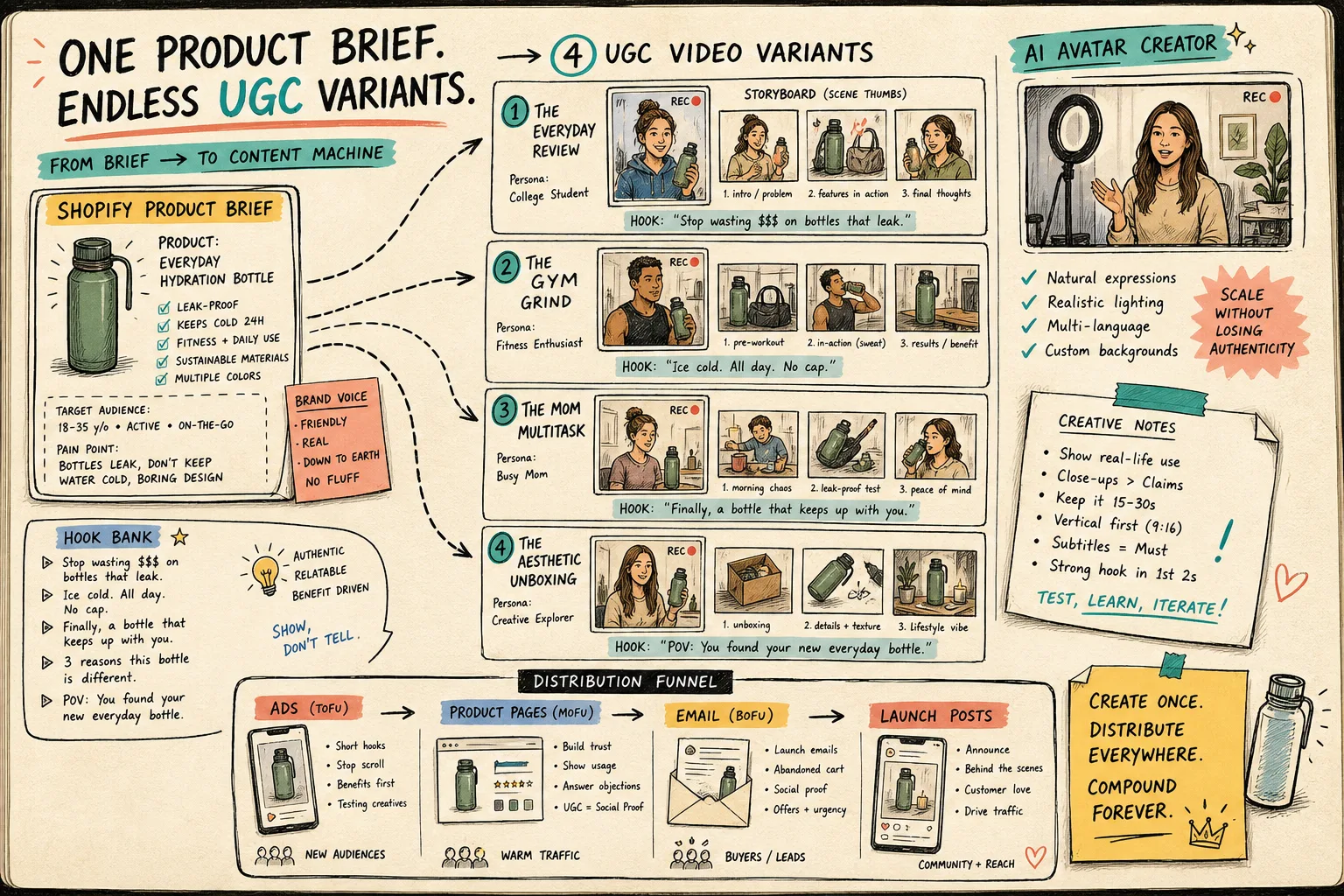
I stopped trying to make one perfect UGC video and started making five from one product brief.
That change matters because a single video usually answers one shopper question. A small pack of videos answers the next four too: what the product is, why it matters, why it feels trustworthy, and what the buyer should do next.
For Shopify merchants, Supra UGC Maker is the part that makes this repeatable. If you want the listing version, I keep the Shopify App Store page open too.
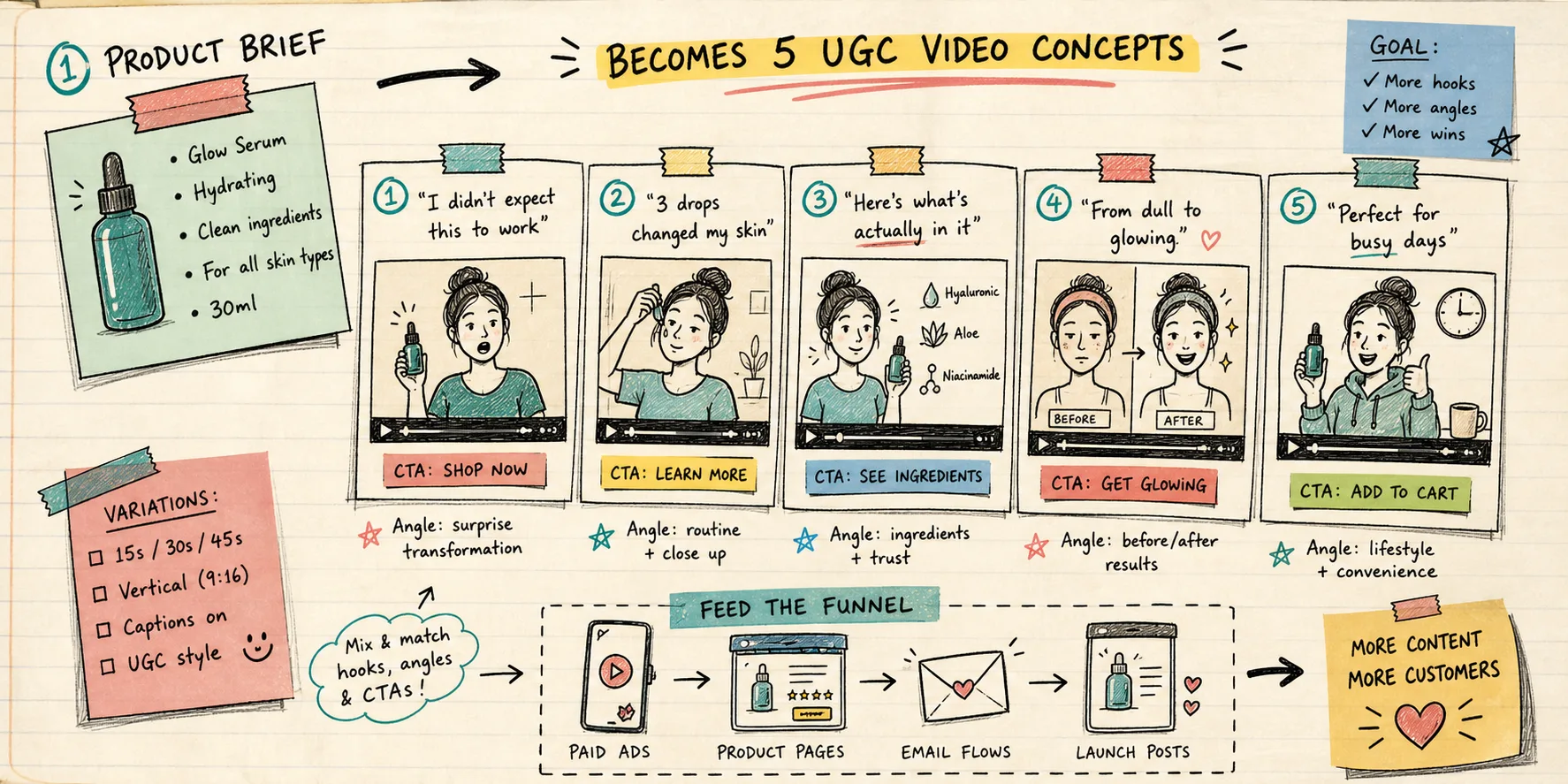
The brief I start from
I do not start with a hook line. I start with a brief that answers five things:
- What product am I selling?
- Who is the shopper?
- What problem do they think they have?
- What proof can I show without overexplaining?
- What should the viewer do after watching?
If those answers are fuzzy, the videos usually drift into generic ecommerce soup. If they are clear, I can generate better variations without rewriting the whole project.
The useful part of Supra UGC Maker is that the brief, the avatar, the scene, the script, and the product reference all stay inside one workflow. That makes it easier to build one idea into several campaign-ready assets instead of scattering notes across docs and drafts.
The five videos I pull out of one brief
I usually aim for a small bundle instead of one hero export:
- A hook-heavy ad clip for cold traffic.
- A product explanation clip for the product page.
- An objection-handling clip for skeptical shoppers.
- A shorter proof clip for email or retargeting.
- A seasonal or launch-specific version with a sharper CTA.
That mix gives me coverage across the funnel without pretending every placement needs the same message.
The trick is not to make each clip radically different. The trick is to change one variable at a time so I can see what moved the result. Usually that means:
- Keep the product promise the same.
- Change the opening line or hook.
- Change the scene or background.
- Change the avatar style or delivery.
- Change the CTA.
What I change between versions
I get the best results when I treat the project like a modular system:
- The avatar can stay the same when I want continuity, or change when I want a fresh angle.
- The scene can shift from studio to lifestyle to seasonal without changing the core message.
- The script can be rewritten around a buyer question, a benefit, or an objection.
- The voice or tone can move from calm and explanatory to more energetic and promotional.
- The product reference can stay visible in every version so the clip still feels grounded.
That is the part most teams skip when they rush from idea to export. They make one clip, then rebuild the whole thing from scratch for the next variant. I would rather save the reusable structure and only swap the parts that need to move.
If you want the companion workflow for keeping the result consistent, I wrote about how I keep Shopify UGC videos on-brand without refilming every time.
For a broader system view, how to build a reusable Shopify UGC video system is the structural version of the same idea, and how to build a Shopify UGC video testing matrix is the next step if you want to compare hooks at scale.
If you are starting from customer questions instead of a written brief, I turn buyer questions into Shopify UGC video variants is the better starting point. And if your raw material is a product page, how I turned one product page into four UGC video angles shows the same logic with a different input.
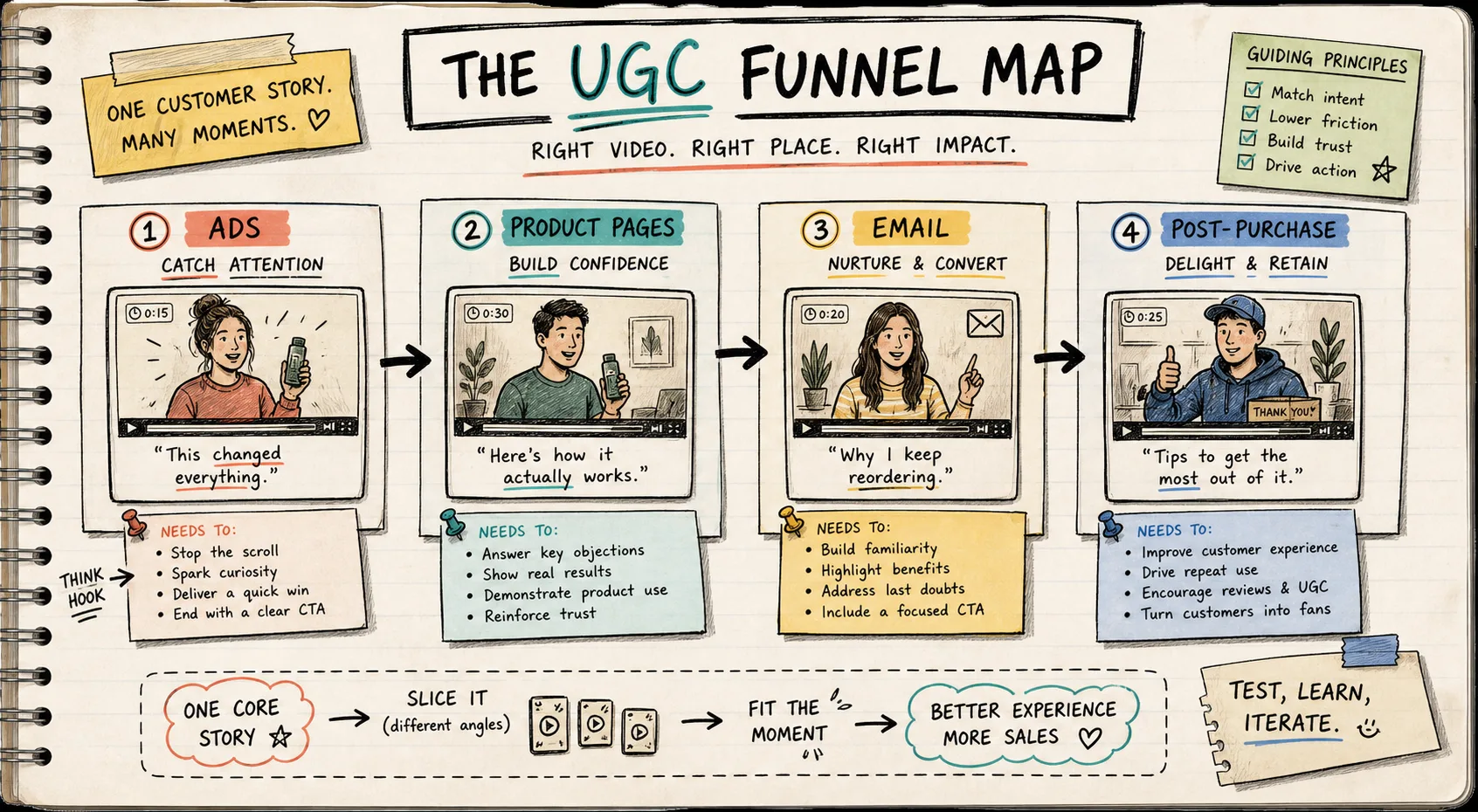
Where each clip belongs in the funnel
I do not ask every clip to do the same job. I assign the clip to the place where it will actually be seen.
- Ads need a fast hook and one clear reason to stop scrolling.
- Product pages need clarity, proof, and enough detail to reduce hesitation.
- Email needs a short teaser or reminder that feels useful, not stuffed.
- Post-purchase needs reassurance, setup guidance, or a next-step nudge.
That split is why I like a launch pack more than a single asset. One clip can be strong, but a launch needs a sequence. If I am planning a new release, I often pair the brief workflow with how to launch a Shopify product with UGC-style video variations so the message stays consistent from the first hook through the final CTA.
My review pass before I publish
I keep the review pass boring on purpose. I want to catch the obvious mistakes before the asset goes anywhere public.
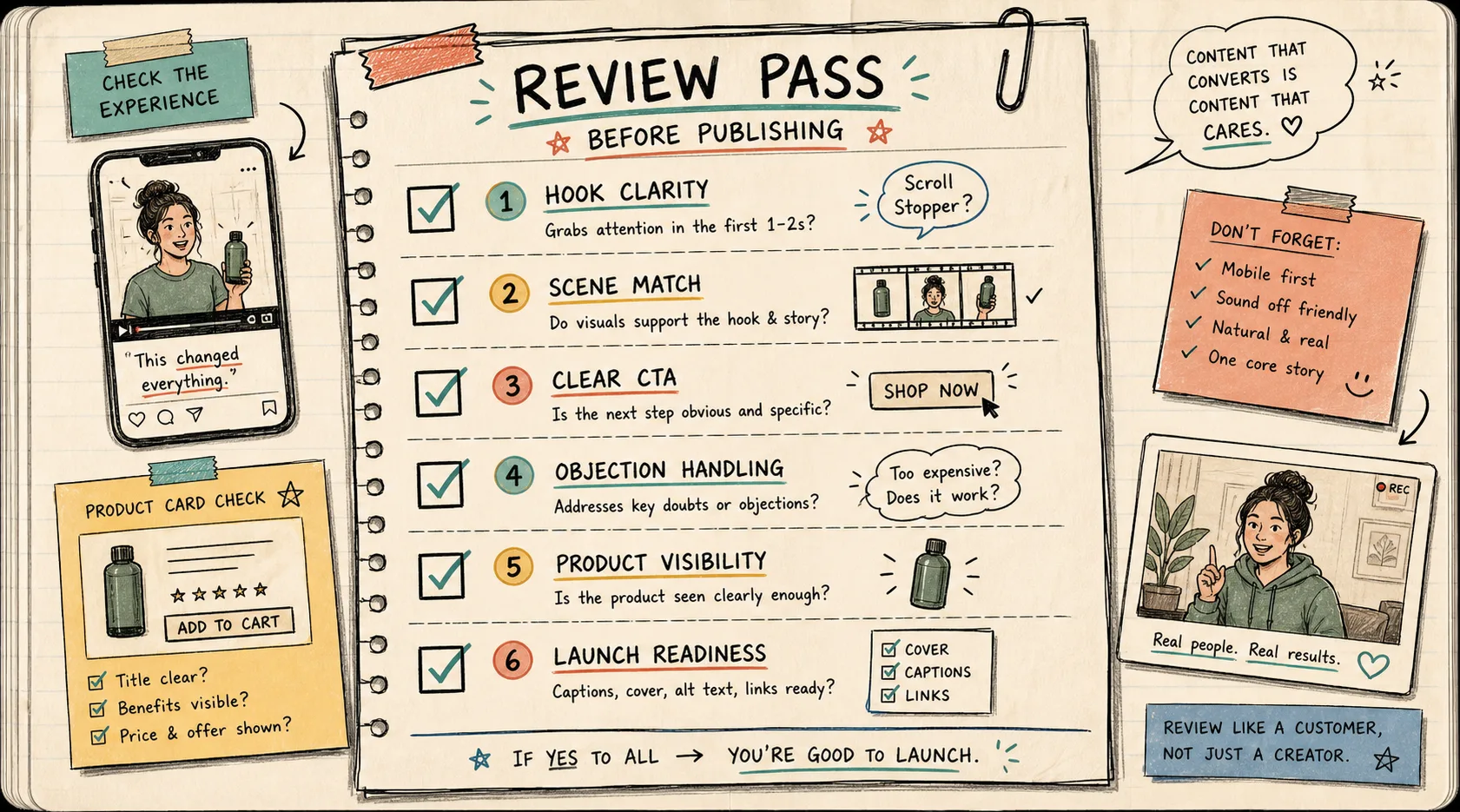
- Does the first line name the product or the use case clearly?
- Does the scene match the claim?
- Is there one obvious CTA?
- Did I include at least one variation for skepticism or objection handling?
- Does the product still look like the hero, not just background decoration?
- Would I be comfortable using this in an ad set, product page, or email flow tomorrow?
If the answer is yes, I keep the project and regenerate only the weak clip. If the answer is no, I fix the brief before I add more variants. That saves me from making six bad videos faster.
The part that survives contact with real work
The best thing about this workflow is not that it makes UGC videos automatically. It is that it makes them repeatable. I can keep the core product story intact, swap the delivery, and end up with a launch pack that is actually useful across ads, product pages, email, and launches.
If you want to test it on a real product, start with the free plan, build one brief, and generate your first five angles. Then keep the best-performing hook and scene combination, and use that as the base for the next launch.